Monches Farm, LLC
5890 Monches Road
Colgate, Wisconsin
phone: 262-966-2787


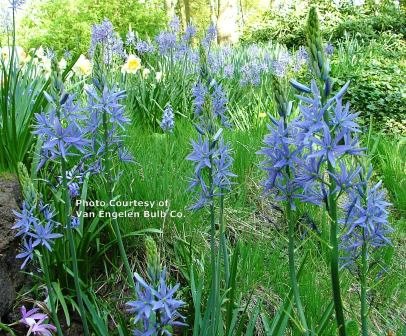
Camassia ("Quamash")
Beautiful and underutilized, this little known plant provides a wonderful vertical accent for the late spring/early summer garden. It is native to northwestern North America and was a food staple for Native Americans, who roasted the tubers as well as mashing them into a flour-like substance. In fact, the roots (bulbs) of this plant sustained Lewis & Clark in their explorations and without it they might not have survived their travels. We have the luxury of being able to grow this beautiful plant simply for its ornamental, rather than its food, value. There are a number of cultivars available, including 'Blue Danube' (pictured above), Cusickii (silvery blue) ' Caerulea' (lighter blue) and SemiPlena (double white). All are hardy bulbs that will provide years of color in the garden. They grow in nature along wet streambeds so will happily grow in moist or wet garden soil, although they are also tolerant of a fair amount of drought. They usually bloom in late spring and shortly afterwards disappear into summer dormancy. Camassia are super-hardy and self-sow modestly so their numbers will slowly increase over the years. Hardy to Zone 4.

.JPG)